
Snooker Betting: How Match Format Affects the Favourite’s Chances
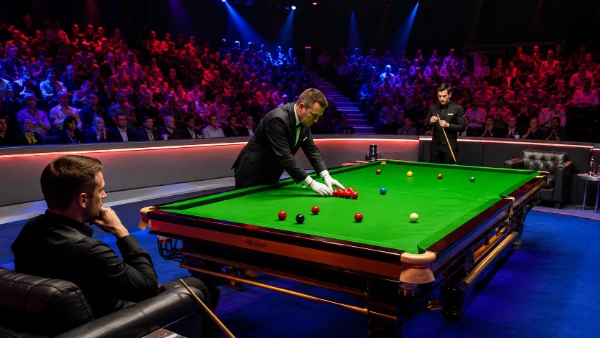
In snooker betting, the name beside the shorter price tells only part of the story. Match format can materially change how likely a stronger player is to turn an underlying advantage into a victory. A favourite asked to win four frames in a best-of-seven contest faces a different risk profile from the same player needing ten frames in a best-of-19 match or eighteen in a World Championship final. Short contests leave less time to recover from a poor start, an awkward table, a fluke or one opponent producing an exceptional burst of scoring. Longer matches usually give superior break-building, safety play and consistency more opportunities to show, although they also introduce fatigue, changing conditions and pressure over several sessions. For bettors, the important point is not simply that longer matches favour better players. It is understanding how much the format changes the balance, how bookmakers have already reflected that information in the odds, and which other factors can strengthen or weaken the expected advantage.
Why Match Length Changes the Favourite’s Edge
A snooker match is decided by frames, and the number required for victory determines how much influence a short spell of unusually good or bad play can have. In a best-of-seven match, the winner needs only four frames. Lose the first two and a player has already conceded half the number the opponent requires. In a best-of-19 contest, by contrast, a 2-0 deficit leaves much more room for the stronger player to settle, adjust to the table and gradually impose a higher standard. This is one reason shorter formats tend to produce more uncertainty. An underdog does not necessarily have to play better across an entire afternoon or evening; a strong opening spell and a few decisive moments may be enough. For a favourite, there are fewer frames in which an underlying advantage in scoring, safety or long potting can compensate for early mistakes.
A simplified probability example shows the effect. Imagine a player who would have a 60% chance of winning any individual frame against a particular opponent, with every frame treated as independent and conditions assumed to remain unchanged. Under that deliberately simple model, the player’s chance of winning a best-of-seven match is about 71%. In a best-of-11 contest it rises to roughly 75%, in a best-of-19 match to about 81%, and in a best-of-35 match to nearly 89%. Real snooker is more complicated because frames are not truly independent: confidence changes, table conditions evolve, tactical patterns emerge and players react to the score. The example is therefore not a prediction model. Its value is that it illustrates the central principle clearly: when one player has a genuine repeatable edge, increasing the number of frames generally gives that edge more opportunities to influence the final score.
This does not mean that a bettor can automatically back every short-priced player whenever the match becomes longer. Bookmakers know the format before publishing their main markets and normally incorporate it into the price. A strong favourite might therefore be considerably shorter in a long contest than in a short one. The real question is whether the quoted odds accurately represent the player’s chance after match length, current form and the opponent’s characteristics are considered together. A price of 1.40, for example, implies a much greater expected chance of victory than 1.80 before bookmaker margin is considered. Match format may explain part of that difference, but it does not prove that either price offers value. Bettors still need to decide whether the market has overestimated or underestimated the favourite’s actual advantage.
Short Matches Give Underdogs Less Ground to Make Up
Best-of-seven, best-of-nine and best-of-11 contests are effectively races to four, five and six frames respectively. In these formats, the opening quarter of a match can have an outsized effect on the final result. A favourite who loses an awkward first frame on the colours and then watches the opponent make a century is immediately under pressure. One further mistake may leave the match close to the point where recovery becomes difficult. An underdog who begins confidently can therefore convert temporary superiority into a match-winning position before the stronger player has produced anything close to their normal average level. This is especially relevant when evaluating players whose performance tends to fluctuate within matches. A competitor who frequently starts slowly may still be highly effective over nineteen or twenty-five frames but can be much more vulnerable when only four or five frames are needed for victory.
Playing style also matters. An aggressive player with excellent long potting and heavy scoring can be particularly dangerous in a short race because several successful opening shots may create immediate frame-winning opportunities. A tactically stronger favourite may prefer enough time for safety exchanges, cue-ball control and percentage play to become decisive. The opposite can also occur: an attacking favourite capable of overwhelming an opponent rapidly may be perfectly suited to a short match. This is why labels such as attacking player or tactical player should not be treated as betting systems by themselves. The useful question is how the two specific styles interact. If an underdog’s best route to victory is producing three or four explosive frames, a short format gives that route more practical importance than a match in which ten, thirteen or seventeen frames are required.
The scoreboard should also be interpreted differently according to format. A 2-0 lead in a race to four is significant because the trailing player needs to win four of the remaining potential five frames. The same 2-0 advantage in a race to ten is far less decisive. This distinction becomes particularly useful in live betting, where prices can move sharply after only a few frames. Bettors should avoid reacting to the score without considering how much of the match remains. A favourite who trails early in a long match may still have ample time to recover, while waiting for a comeback in a short contest can quickly become unrealistic. The current score matters, but its meaning depends on the distance from the winning line rather than simply on the number of frames separating the players.
Longer Matches Reward Repeatable Quality and Recovery
When the required number of winning frames rises, consistency becomes increasingly important. A player can produce one excellent frame almost by accident at professional level, but sustaining superior scoring, safety and decision-making across nineteen, twenty-five or more frames is a different challenge. Longer matches provide more opportunities for the stronger competitor to recover from missed balls, lost close frames or a temporary decline in pot success. They also reduce the relative importance of isolated incidents. A fluke that effectively decides one frame can be enormous in a race to four, yet much less influential when the eventual winner needs thirteen or eighteen frames. For bettors assessing a clear favourite, this is why a longer format often provides greater confidence that the final result will reflect the players’ broader difference in ability rather than a small sequence of unusual events.
Long matches, however, test more than technical quality. Concentration, session management and the ability to respond after intervals become increasingly important. A player may finish one session in excellent rhythm and return several hours later producing a very different standard. Table conditions can also alter as a match progresses, and tactical adjustments become easier once both competitors have had time to identify recurring patterns. A favourite who initially struggles with an opponent’s safety game can modify shot selection, while an underdog may find it harder to keep an unexpected scoring level going through several sessions. These elements are difficult to reduce to a single statistic, but they explain why previous evidence from long matches can be more relevant than a collection of results from quick early-round encounters.
Recent major events provide useful context. At the 2026 Masters, Kyren Wilson defeated John Higgins 10-6 in the final, meaning the champion had to reach ten frames rather than relying on a short sprint. The 2026 World Championship went much further: Wu Yize defeated Shaun Murphy 18-17 in Sheffield, with the title decided in the thirty-fifth and final possible frame. That result is also a reminder that greater match length does not remove uncertainty. Even over the longest traditional format at the sport’s biggest event, two elite players can remain virtually inseparable. The sensible interpretation is therefore probabilistic rather than absolute. More frames normally give a genuine favourite additional time for superior ability to count, but they never turn a likely outcome into a guaranteed one.
Why the World Championship Is a Special Betting Test
The World Championship at the Crucible provides the clearest example of how snooker changes as match length increases. The main draw traditionally begins with best-of-19 first-round matches, with players needing ten frames to progress. The second round and quarter-finals extend to best of 25, requiring thirteen. Semi-finalists face a best-of-33 contest and must reach seventeen, while the final is played over a maximum of 35 frames with eighteen needed for the title. This progression means that the characteristics required to win the tournament change as players move deeper into the draw. A competitor can survive one difficult session in the first round, but the later stages increasingly demand repeatable performance over extended periods. When analysing outright or match betting, treating every round as if it presents the same challenge misses an important part of the event.
Multi-session matches also make intermediate scores more difficult to interpret. A player can trail heavily after a poor opening session and still have enough frames remaining to transform the contest. Equally, protecting a large lead creates its own pressure. The player in front may become conservative, while the opponent can approach the next session with little to lose. Bettors should therefore look beyond a raw score such as 6-2 or 9-7 and consider how many frames remain, who has been creating the better chances and whether the score accurately reflects the standard of play. A competitor who leads after repeatedly winning frames from behind may be in a weaker position than the scoreboard suggests, while a trailing favourite who has continued to create scoring opportunities may still have a realistic route back into the match.
Qualification and Crucible experience can add another layer. A qualifier may arrive in Sheffield after several competitive matches and already be accustomed to pressure, while a seeded player enters the championship without having played those qualifying rounds. That does not automatically make the qualifier stronger, but it means ranking position alone is not enough to evaluate the opening match. Later in the tournament, experience of long sessions and one-table conditions can become more relevant. Bettors comparing head-to-head records should also check the formats in which previous meetings were played. Beating an opponent 4-1 in a short event is useful evidence, but it does not establish that the same relationship will hold over twenty-five or thirty-three possible frames. The demands are too different for the scores to be treated as directly interchangeable.
How to Price a Favourite More Sensibly
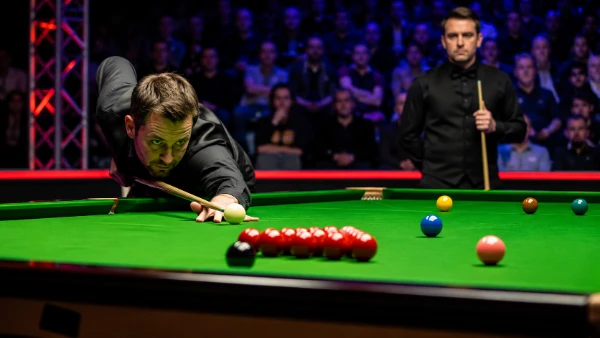
A practical assessment should begin with the reason a player is favourite rather than with the price itself. World ranking is useful because it reflects performance over a substantial period, but it can lag behind rapid improvement or decline. Recent results should therefore be considered alongside scoring and match context. Frequency of 50-plus breaks and centuries can indicate how efficiently a player converts openings, while results against strong opponents can be more informative than a run of victories against considerably lower-ranked competition. Safety quality is harder to summarise with one headline number, yet it becomes particularly important when two players are closely matched in scoring. The aim is not to build an overly complicated statistical model. It is to establish whether the favourite has a broad, repeatable advantage or is simply carrying a familiar name and a strong ranking into a contest that may be closer than the odds imply.
Match length can then be used as an adjustment to that assessment. If the favourite appears clearly superior across several areas and has a strong record in longer contests, additional frames generally reinforce the case for expecting the stronger player to progress. If the difference is narrow, a short format should encourage greater caution because the underdog needs fewer successful frames to turn a competitive matchup into an upset. The important step is to compare this reasoning with the available price. A favourite can be highly likely to win and still represent poor betting value if the odds are too short. Conversely, accepting a slightly lower estimated win probability in a short match may be reasonable if the market has pushed the favourite’s price too far in response to reputation. Probability and value are related, but they are not the same thing.
The effect of format also extends beyond the match-winner market. Frame handicaps become harder for favourites to cover when an opponent is competitive enough to collect frames consistently, and the maximum possible number of frames changes the context for totals markets. In a short race, one-sided scoring can settle a handicap or total rapidly. Longer matches allow more combinations: a favourite might win comfortably while still conceding enough frames to affect a large handicap, and a close contest can move towards the upper end of the frame range without reaching a decider. Markets involving individual-frame results, highest breaks or century-related outcomes introduce different variables again. Before using any of them, bettors should understand exactly how settlement works and avoid assuming that a strong match favourite must also be the strongest selection in every related market.
A Practical 2026 Checklist Before Placing a Snooker Bet
The first step before analysing any match is to confirm the exact format. Tournament structures can differ between events and between rounds of the same event, so a remembered format from a previous season should not be treated as sufficient. Check the number of frames, the number required for victory and whether the match is played in one session or several. Then compare the players’ recent results in similar conditions. A 10-8 victory may tell more about readiness for a best-of-19 match than several quick 4-0 results, while a player entering a short event after repeatedly starting matches slowly may deserve extra scrutiny. Official draws, schedules and player statistics should be checked close to the match because withdrawals, revised timings and other confirmed changes can alter the context.
The next step is to separate genuinely relevant form from attractive but weak statistics. Head-to-head records can be useful, yet matches from many years earlier or contests played over very different distances should carry less weight. Recent scoring should be considered alongside opponent quality rather than in isolation. It is also worth checking whether a player has repeatedly reached deciding frames, recovered from deficits or struggled to close matches after taking the lead. None of these observations guarantees that the pattern will continue, but together they provide a fuller picture than ranking position alone. For a favourite, the central question is whether the qualities supporting the short price are likely to remain effective for the number of frames required on that particular day.
Finally, match format should be treated as one component of a betting decision rather than as a shortcut. Longer matches usually reduce the influence of random short-term swings and give superior players more chances to demonstrate their edge, but upsets remain a normal part of professional snooker. Short matches increase uncertainty, yet that does not mean backing every underdog is automatically sensible. The odds still determine whether a selection offers reasonable value. Stakes should be kept within a fixed personal budget, and losses should never be chased simply because a favourite appeared likely to win before the match. The useful purpose of format analysis is to improve the quality of a probability estimate. It cannot remove uncertainty, and it should never be treated as a promise of profit.